

What is Supervised Machine Learning? || Supervised Machine Learning techniques and algorithms.
 |
| supervised machine learning |
Supervised Machine Learning
Supervised machine learning is one of the methods of machine learning that uses various mathematical techniques to train a model using already labeled data. With labeled training data, one can build supervised machine learning algorithms to make predictions on new, unseen data.
Some examples of supervised machine learning systems include self-driving cars, expert systems, facial recognition programs, chatbots, and robots that assist with future decision-making.
The following are some of the key mathematical techniques used in building supervised machine learning algorithms:
-
Linear Regression
-
Logistic Regression
-
Decision Tree
-
Random Forest
-
Support Vector Machine (SVM)
Linear Regression:
Linear regression uses a linear mathematical formula to predict a dependent variable (output) based on one or more independent variables (inputs).
For example, consider a graph showing the relationship between area and price of a house. This can help illustrate how the Linear Regression technique works.
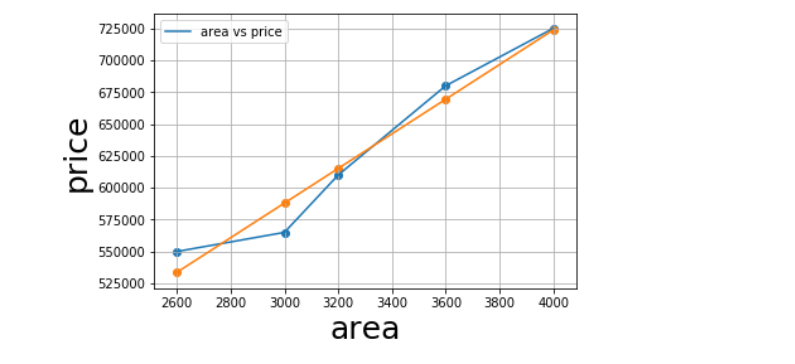
i.e.
y = m * x + b
Where:
-
y = dependent variable
-
x = independent variable
-
m = slope
-
b = y-intercept
In this context, the area is the independent variable (plotted on the x-axis), and the price is the dependent variable (plotted on the y-axis). The value of the dependent variable (i.e., price) is predicted using the above linear mathematical formula: y = m * x + b.
Linear Regression can be further classified into:
-
Simple Linear Regression – when there is only one independent variable
-
Multiple Linear Regression – when there are two or more independent variables
Logistic Regression
Logistic Regression is a classification algorithm that uses the logit (or sigmoid) mathematical function:
f(x) = 1 / (1 + exp(-x))

This function helps predict the probability of the occurrence of an event by fitting the input data to the logit curve. The output of the logistic function always lies between 0 and 1, making it ideal for probability estimation.
Logistic Regression is further classified into:
-
Binary Classification
-
Multiclass Classification
In binary classification, the model predicts one of two possible classes, such as True or False, Yes or No, or Spam or Not Spam.
In multiclass classification, the model can predict more than two classes. For example, classifying an image as a cat, dog, or bird.
Decision Tree
The Decision Tree technique is a flowchart-like structure used for classification and regression tasks.
-
Each internal node represents a test on a feature.
-
Each leaf node represents a class label (or output value).
-
Each branch represents a decision rule or a combination of feature conditions that lead to the corresponding class label.
In essence, the Decision Tree splits the data based on feature values, guiding the decision-making process from the root to a leaf, where the prediction is made.
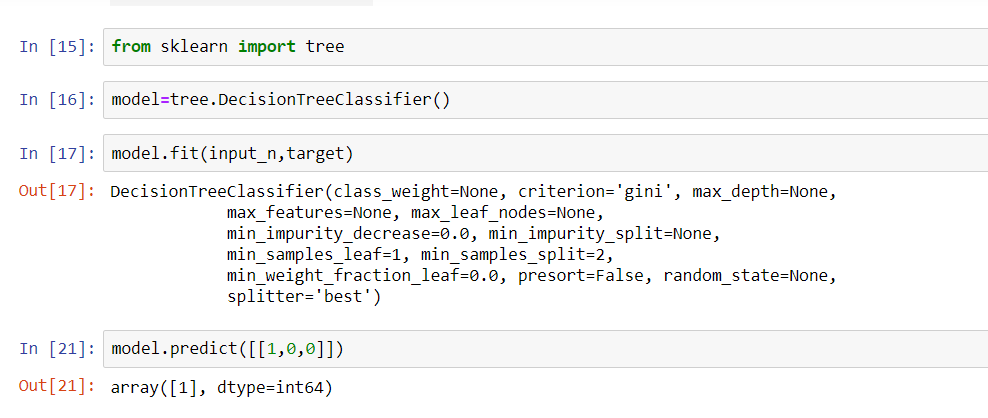
The syntax for this is as shown above.
Random Forest
Random Forest is a supervised machine learning algorithm that can be used for both classification and regression tasks.
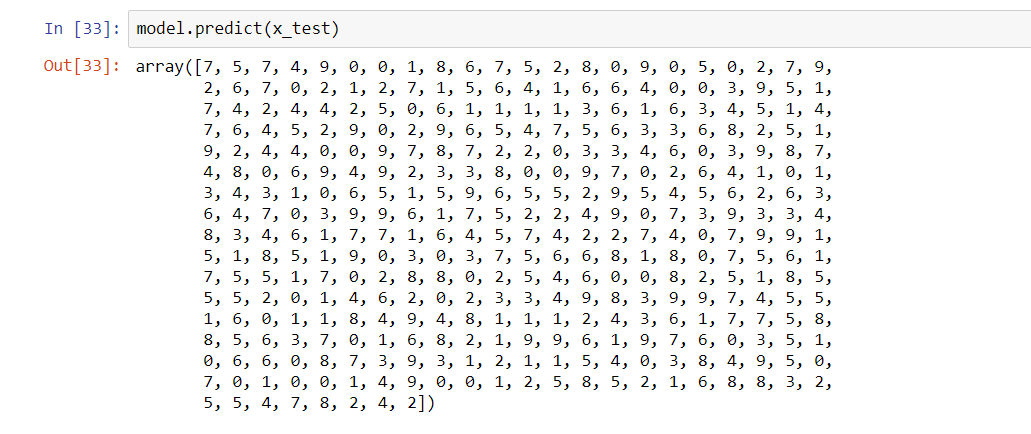
It operates by constructing multiple decision trees during training and outputs the class (for classification) or the average prediction (for regression) of the individual trees. This ensemble approach improves accuracy and reduces the risk of overfitting compared to a single decision tree.

Support Vector Machine (SVM)
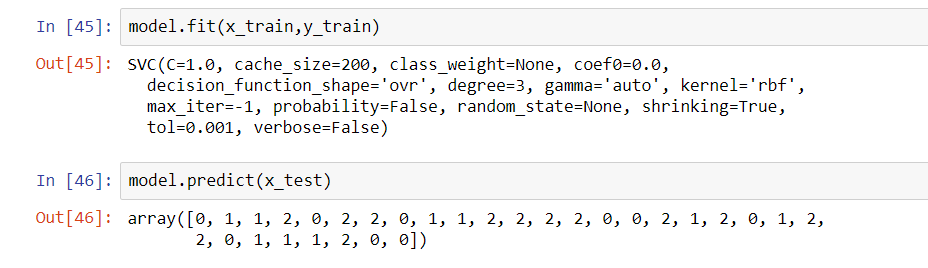
Support Vector Machine (SVM), also known as a Support Vector Network, is a powerful supervised machine learning technique used for both classification and regression tasks. It is especially effective in solving highly non-linear problems using a method called the kernel trick.
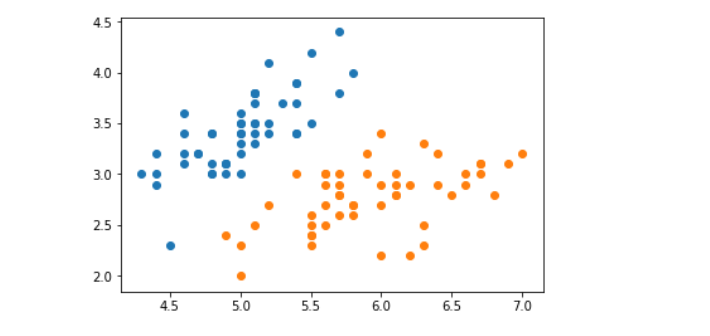
SVM is a discriminative classifier that works by finding the optimal decision boundary (also called a hyperplane) that best separates data points belonging to different classes. The goal is to maximize the margin between the classes, making the model robust and generalizable.






 gyanugenai
Leave a comment