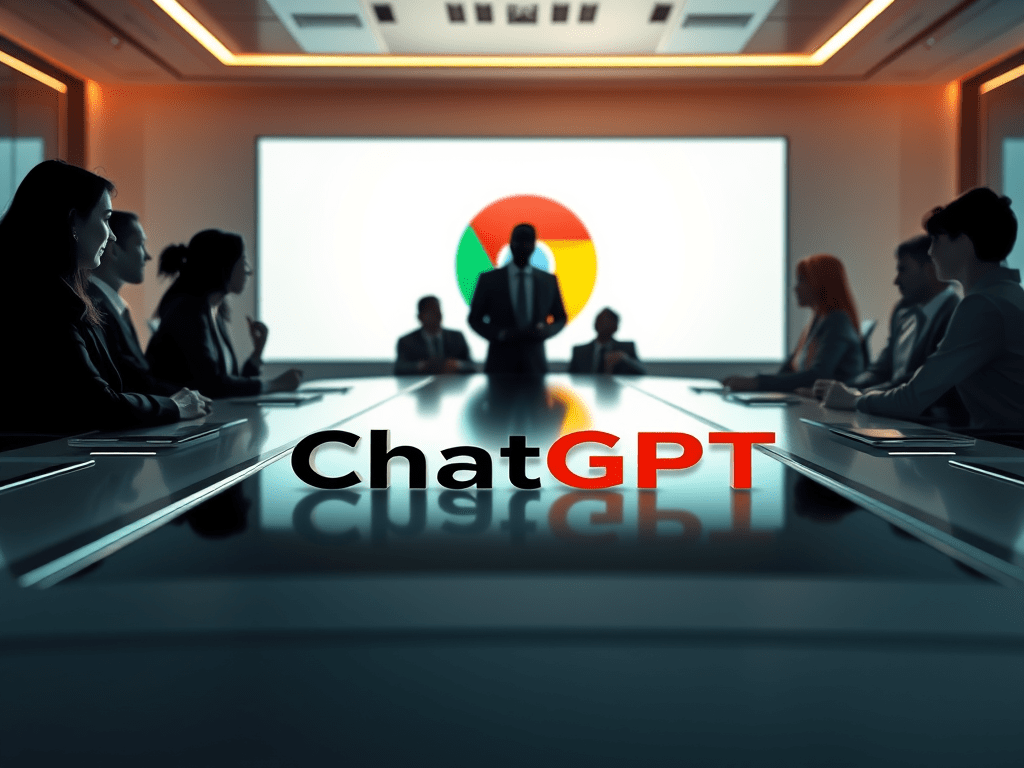
OpenAI has expressed interest in acquiring Google Chrome if it ever becomes available due to antitrust actions. This revelation came during a high-profile trial where the U.S. government is seeking to break up Google’s alleged monopoly on online search.
OpenAI Shows Interest in Buying Chrome Amid Google Antitrust Trial
As the U.S. government intensifies its legal battle against Google’s dominance in online search, a new twist has emerged: OpenAI, the company behind ChatGPT, has signaled that it would consider buying Google Chrome—if the browser were ever put up for sale.
The Legal Backdrop
This development surfaced during a courtroom testimony in Washington D.C., part of an ongoing antitrust case brought by the U.S. Department of Justice (DOJ) against Google. The trial aims to determine whether Google should be broken up due to its overwhelming influence in the digital marketplace—particularly in search and advertising.
Testifying on behalf of the U.S. government, OpenAI executive Nick Turley stated that the AI firm would be interested in acquiring Chrome, the world’s leading web browser, if it were to be divested by Google. However, Google has made it clear that Chrome is not for sale and is pushing to dismiss the DOJ’s lawsuit.
Google’s Stronghold in the Browser Market
According to data from Similarweb, Google Chrome commands around 64% of global web browser usage. The second most popular browser, Apple’s Safari, accounts for just 21%. This dominance is a key issue in the DOJ’s case, which argues that Google’s market control stifles competition and innovation.
This isn’t Google’s first run-in with regulators. Courts previously found the tech giant guilty of maintaining monopolies in both online search and advertising technologies. Google is currently appealing those decisions, arguing that the remedies being proposed by the government could negatively impact consumers and the broader tech industry.
OpenAI and the Search Engine Wars
OpenAI, while known primarily for its AI chatbot ChatGPT, is also an active player in the search space. Turley revealed that OpenAI had previously proposed a partnership with Google to integrate its search results into ChatGPT. That offer was reportedly declined.
“We have no partnership with Google today,” Turley said in court, according to Reuters. Instead, OpenAI has a strong alliance with Microsoft, which owns both the Bing search engine and the Edge browser. This partnership has allowed OpenAI to integrate web search features into its own products using Bing’s infrastructure.
Google, meanwhile, continues to compete in the AI space with its Gemini platform—an AI model designed to rival ChatGPT in various applications.
What’s Next?
The trial, which is expected to run for three weeks, is being closely monitored by other tech giants like Meta, Apple, and Amazon—many of whom are also under antitrust scrutiny. The outcome could set significant precedents for how tech monopolies are handled in the United States.
In a related development, OpenAI is rumored to be exploring the creation of a new social media platform. According to reports from The Verge, this project is still in early development. OpenAI CEO Sam Altman has been quietly seeking feedback on what could potentially become a rival to Elon Musk’s platform, X (formerly Twitter). Notably, Musk and Altman were once business partners at OpenAI before parting ways over strategic disagreements.
As the tech landscape continues to evolve with generative AI, legal actions like these are poised to reshape the balance of power among the industry’s biggest players.
Source: BBC News




 gyanugenai
Leave a comment