
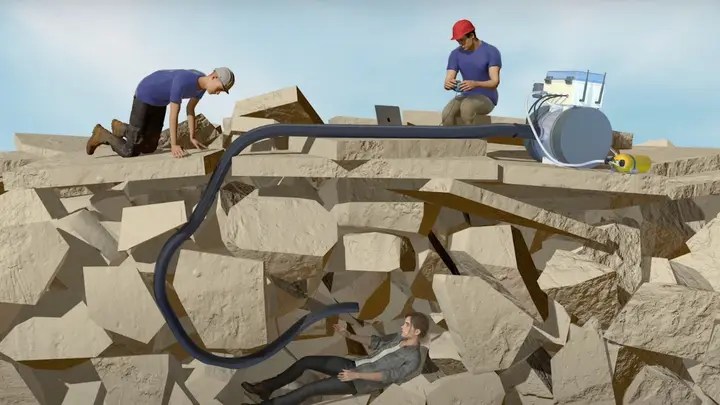
A soft, vine-like robot named SPROUT is changing the way emergency crews search for survivors in collapsed buildings. Developed by MIT Lincoln Laboratory and the University of Notre Dame, this inflatable robot can maneuver through tight spaces, providing critical visibility in disaster zones.
Vine-Like Robot SPROUT Offers a Breakthrough in Disaster Rescue Technology
In the chaotic aftermath of building collapses, where rubble can make rescue missions extremely dangerous and time-sensitive, a new innovation is giving emergency teams a vital edge. Meet SPROUT—a flexible, soft robot designed to snake through debris and locate survivors in places humans and traditional machines can’t reach.
What Is SPROUT?
SPROUT stands for Soft Pathfinding Robotic Observation Unit. It was developed by the Massachusetts Institute of Technology’s Lincoln Laboratory in partnership with the University of Notre Dame. Unlike conventional robots or cameras, SPROUT mimics the growth pattern of a plant vine, allowing it to extend and navigate through narrow, winding spaces typically blocked off by debris.
This robotic tool is part of a broader effort to improve search-and-rescue operations with safe, flexible, and adaptable technology.
How SPROUT Works
At the core of SPROUT’s innovation is its soft, inflatable body. The robot is made of airtight fabric and expands by inflating, enabling it to “grow” from a static base into tight spaces. Controlled via a joystick, SPROUT is equipped with a camera at its tip that streams live video to responders, allowing them to see inside collapsed structures without physically entering unstable areas.
The robot also features internal pouch motors, which help it bend and steer. A spool system keeps the design compact and easy to deploy. On top of that, SPROUT can be equipped with various sensors to scan for structural hazards, map interior spaces, or even detect heat signatures.
The Problem with Traditional Tools
Typical search tools, including rigid robots and static cameras, are often inadequate in disaster scenarios. Rigid devices are not only prone to breaking in tight, shifting spaces but also struggle to navigate complex debris patterns. Static cameras require new access holes to be cut, which delays search efforts and puts rescuers at greater risk.
Manual search methods, while effective, are time-consuming and physically taxing. SPROUT eliminates many of these issues with its ability to weave through rubble effortlessly and deliver real-time intelligence to the team.
Field Testing and Real-World Applications
SPROUT has already undergone rigorous testing at a FEMA training site in Massachusetts, where it successfully maneuvered through simulated collapse environments. These trials helped fine-tune its durability, steering accuracy, and overall usability.
The project brings together MIT’s engineering expertise with the pioneering research of Professor Margaret Coad at Notre Dame. By offering live demonstrations to first responders, especially those with limited resources, the team is actively working to make this life-saving tech more accessible and field-ready.
What’s Next for SPROUT?
While the current version of SPROUT can stretch up to 10 feet, future designs aim to go beyond 25 feet, making it even more capable during large-scale disasters. Researchers are also exploring the idea of deploying multiple SPROUTs at once to cover wider areas more quickly.
There’s also potential for SPROUT to go beyond disaster zones. From inspecting military equipment to navigating tight corners in industrial facilities, its soft, adaptive design could prove useful across many sectors that require access to hard-to-reach places.
As SPROUT continues to evolve, it represents a major step forward in the way technology can support life-saving missions—making rescue efforts faster, safer, and more effective for both responders and survivors.
Source: Fox News




 gyanugenai
Leave a comment