Summary:
Beijing is intensifying efforts to build a domestic AI industry independent of foreign technologies. Through substantial funding in the Yizhuang Development Zone, the city aims to create a self-sufficient AI ecosystem powered solely by Chinese innovations.
China Accelerates Push for AI Independence
In a move reflecting China’s growing ambition for technological independence, Beijing is channeling tens of millions of dollars into the development of a fully domestic artificial intelligence (AI) supply chain. The initiative is centered in the Yizhuang Development Zone—officially known as the Beijing Economic and Technological Development Zone—which has unveiled plans to build a leading AI industry ecosystem valued at 80 billion yuan (approximately USD $11 billion) by the end of 2025.
This ecosystem will be entirely reliant on Chinese-developed semiconductors, operating systems, and open-source software platforms. The objective is to minimize reliance on foreign technologies amid ongoing tensions with the United States.
Domestic Alternatives to Nvidia and U.S. Chips
A central component of the plan is the advancement of high-performance graphics processing units (GPUs) and chips built on the open-source RISC-V architecture. RISC-V, a simplified and customizable CPU design, has been gaining popularity in China as an alternative to dominant Western architectures like Intel’s x86 and Arm’s designs.
The strategy reflects Beijing’s desire to offset the impact of U.S. export restrictions, which have limited Chinese access to cutting-edge chips produced by companies such as Nvidia—vital for AI training and operations.
Funding Groundbreaking Innovation
The plan outlines up to 10 million yuan in funding for innovative research areas such as quantum computing, optical computing, and biologically inspired intelligence systems. These technologies are seen as crucial for the next generation of AI capabilities.
In addition, Yizhuang authorities plan to establish two large-scale AI server clusters, each equipped with tens of thousands of chips. These clusters will provide computational support for developing complex multimodal AI systems, including video analysis and 3D content generation.
Supporting Start-ups and Infrastructure
To further stimulate innovation, up to 20 million yuan in computing subsidies and 1 million yuan in direct funding will be provided to AI start-ups and data centers. These initiatives are aligned with China’s national “AI Plus” strategy, which promotes the integration of artificial intelligence across multiple industries.
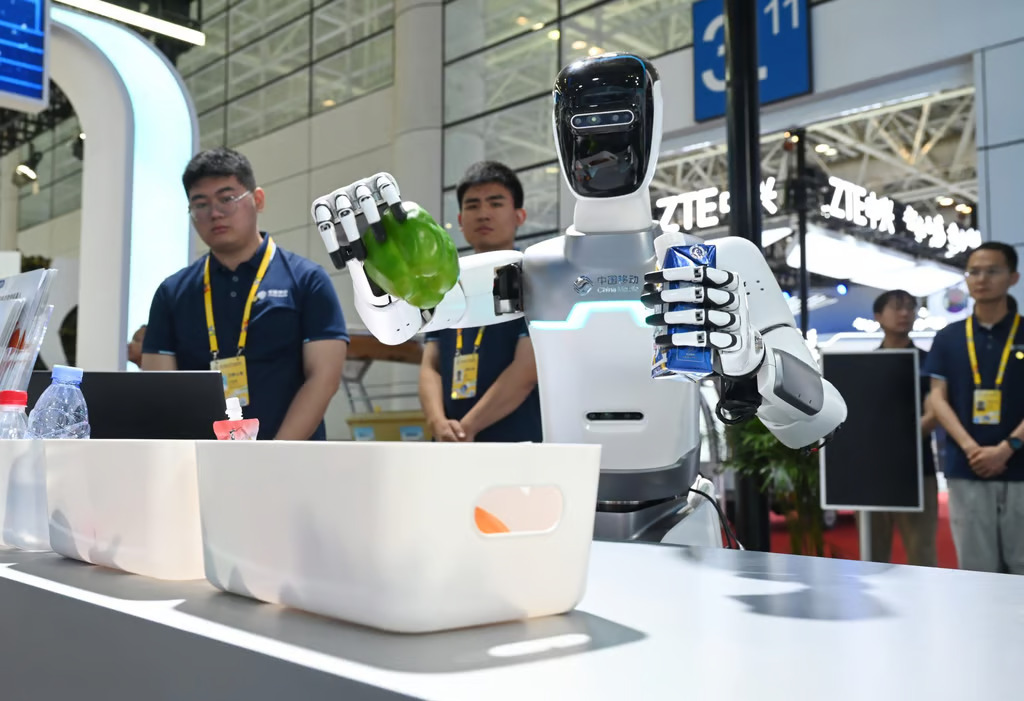
This broader strategy includes incorporating AI into consumer electronics such as smartphones and PCs, as well as critical sectors like medical research, robotics, smart manufacturing, and autonomous vehicles.
Strategic Implications
Beijing’s investment in a Nvidia-free AI ecosystem underlines a larger geopolitical shift in the global tech landscape. As the United States tightens restrictions on advanced semiconductor exports, China is accelerating its efforts to establish a secure and independent foundation for AI growth.
The Yizhuang initiative not only highlights this strategic pivot but also sets the stage for China to lead in homegrown AI innovation in the years to come.
Source: South China Morning Post




 gyanugenai
Leave a comment