
Summary:
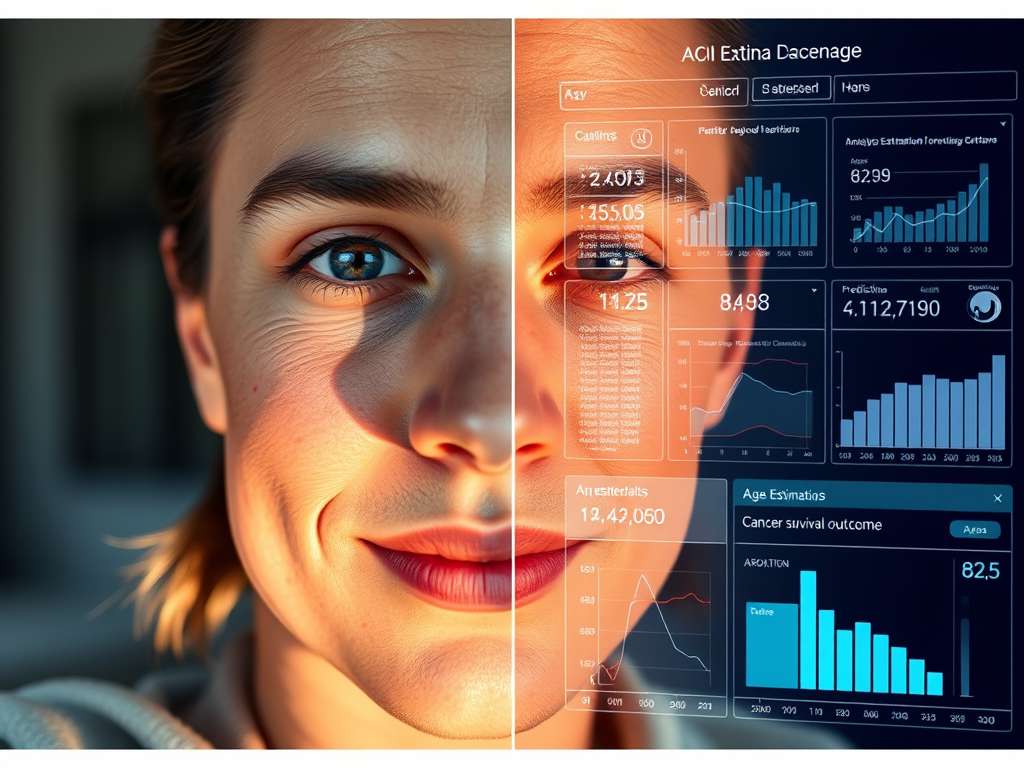
Researchers at Mass General Brigham have developed an artificial intelligence tool, FaceAge, that analyzes facial images to estimate a person’s biological age and predict cancer survival outcomes. The technology outperformed doctors in certain clinical predictions and could influence future healthcare decisions.
What Is FaceAge and How Does It Work?
FaceAge is a deep-learning algorithm developed by Mass General Brigham’s Artificial Intelligence in Medicine (AIM) program. The tool uses facial images to estimate a person’s biological age — a metric that reflects the physiological aging process, which can differ from the actual number of years a person has lived.
Using over 58,000 images of presumed healthy individuals from public datasets, FaceAge was trained to identify patterns that relate to aging. The researchers then tested it on over 6,000 cancer patients and 100 individuals receiving palliative care.
AI Outperforms Clinicians in Some Scenarios
During testing, FaceAge estimated the biological age of cancer patients using their photos taken before radiotherapy. The tool often assessed them to be about five years older than their chronological age — a sign of accelerated aging linked to health challenges.
In another test, FaceAge was asked to predict life expectancy for palliative care patients. These predictions were then compared with estimates from 10 clinicians. The AI tool proved more accurate in its assessments, highlighting its potential for supporting clinical decision-making.
Clinical Implications and Ethical Considerations
Researchers believe that tools like FaceAge could help clinicians make more informed care decisions without being influenced by subjective visual cues or implicit biases. Dr. Hugo Aerts, one of the study’s lead authors, emphasized that facial imagery contains valuable biological insights that can guide treatment planning.
However, experts also warn against over-reliance on such technology. Emergency medicine physician and AI advocate Dr. Harvey Castro noted that while FaceAge adds measurable value to the “eyeball test” used by clinicians, it must be used alongside — not in place of — human judgment.
Dr. Castro also raised ethical questions around data privacy, consent, and the psychological effects of such predictions. Patients may not fully understand how their facial data is being used or might feel negatively if told they appear older than their age.
The Road Ahead for FaceAge
The researchers plan to conduct broader studies to validate FaceAge in diverse clinical environments and among patients with varying stages of disease. Future research will assess the tool’s ability to predict other health outcomes and chronic conditions, potentially extending its application beyond cancer care.
While promising, the tool is still in the research phase and not yet ready for widespread clinical use. Its developers stress the importance of integrating AI responsibly into healthcare systems, ensuring it supports — but does not replace — human expertise.
Source: Fox News




 gyanugenai
Leave a comment