
Summary:
While Hong Kong advances trials for autonomous vehicles, industry leaders advise a measured approach due to complex road conditions and safety concerns. However, lawmakers highlight the city’s robust infrastructure and regulations as promising for global tech players.
Hong Kong’s Progress in Autonomous Vehicle Trials
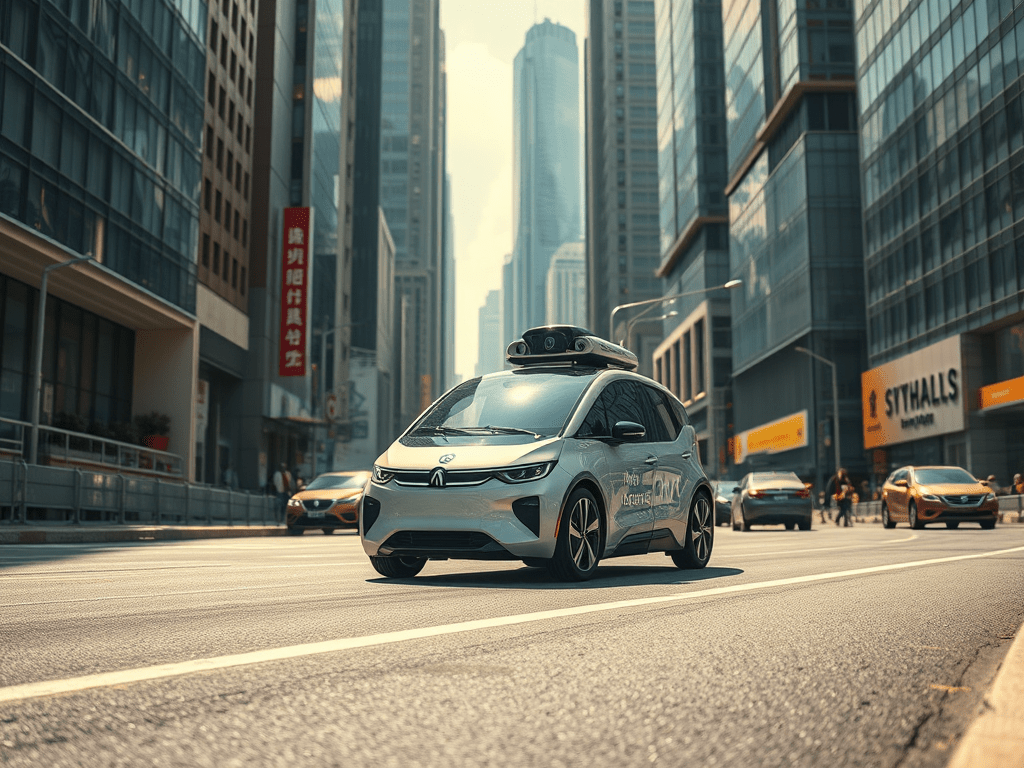
Hong Kong is actively expanding its autonomous vehicle testing initiatives, aiming to introduce passenger and commercial self-driving services within the next one to two years. The city’s Secretary for Transport and Logistics, Mable Chan, recently confirmed that trials have achieved Level 4 automation—one step below full autonomy—placing Hong Kong in line with international standards.
This development aligns with the global six-tier classification set by the Society of Automotive Engineers, which ranges from Level 0 (no automation) to Level 5 (full automation).
Infrastructure and Legislation Attracting Global Interest
Lawmaker Gary Zhang Xinyu believes Hong Kong’s advanced road infrastructure and progressive legal framework could position it as a strategic hub for international driverless tech firms. He noted that foreign companies, including both vehicle manufacturers like Tesla and Huawei, and autonomous fleet operators such as Baidu, have shown strong interest in joining local trials.
Because the U.S. and China drive on the left, Hong Kong offers a valuable testing ground for right-hand-drive autonomous systems, making it uniquely suited to global deployment.
Legislative Framework Already in Place
In March last year, Hong Kong implemented the Road Traffic Autonomous Vehicles Regulation Ordinance, providing a legal structure for the testing and future deployment of autonomous cars. This ordinance outlines safety measures and operational protocols, encouraging innovation while safeguarding the public.
Under this law, Baidu’s Apollo Go has received licenses to operate 12 autonomous vehicles in designated areas such as North Lantau and the West Kowloon Cultural District, with additional testing planned in Tung Chung and Cyberport.
The city’s Smart Traffic Fund has also invested around HK$170 million in 13 projects related to autonomous transportation.
Concerns Over Rapid Deployment and Urban Constraints
Despite legislative progress, some experts have raised red flags. Ringo Lee Yiu-pui of the Hong Kong, China Automobile Association cautioned against speeding up the adoption of driverless vehicles. He stressed the need for roadside assistance systems equipped with real-time sensors and communication tools that can support safe navigation and emergency response.
Lee noted that the city’s dense urban layout—with its narrow roads and high-rise structures—poses significant technical and financial challenges. Installing sufficient roadside units for object detection would be both difficult and costly.
The Call for Gradual Implementation
Francis Fong Po-kiu, honorary president of the Hong Kong Information Technology Federation, emphasized a phased rollout based on broad trial results. He cited mainland China’s experience, where AI systems from different manufacturers have occasionally led to inconsistent behavior, such as inefficient route decisions and congestion.
Fong suggested expanding the scope of trials to include more routes, geofenced zones, and areas with lower population density before any large-scale deployment.
Public Confidence and Liability Concerns
Quentin Cheng Hin-kei of the Public Transport Research Team echoed these sentiments, questioning the viability of autonomous systems on Hong Kong’s complex road networks. He pointed out that human override capabilities, common in global implementations, can serve as critical safety measures.
Cheng also urged clarity on liability in the event of accidents, particularly those involving injury or death caused by driverless vehicles.
Preparing the Public and AI for Local Conditions
Zhang added that one of the most significant hurdles remains the need for AI systems to accurately interpret Hong Kong’s specific traffic signs and markings. Public acceptance of autonomous vehicles, he said, is equally crucial, as many residents are still unfamiliar with the concept.
Promoting awareness and addressing psychological safety concerns will be vital in achieving broad adoption.
Source: South China Morning Post




 gyanugenai
Leave a comment