Summary:
Comic book illustrator Nich Angell has voiced deep concerns about artificial intelligence potentially replacing human creativity. As lawmakers debate AI regulation, artists call for urgent protections to safeguard their livelihoods and intellectual property.
The Rising Threat of AI in the Creative Industry
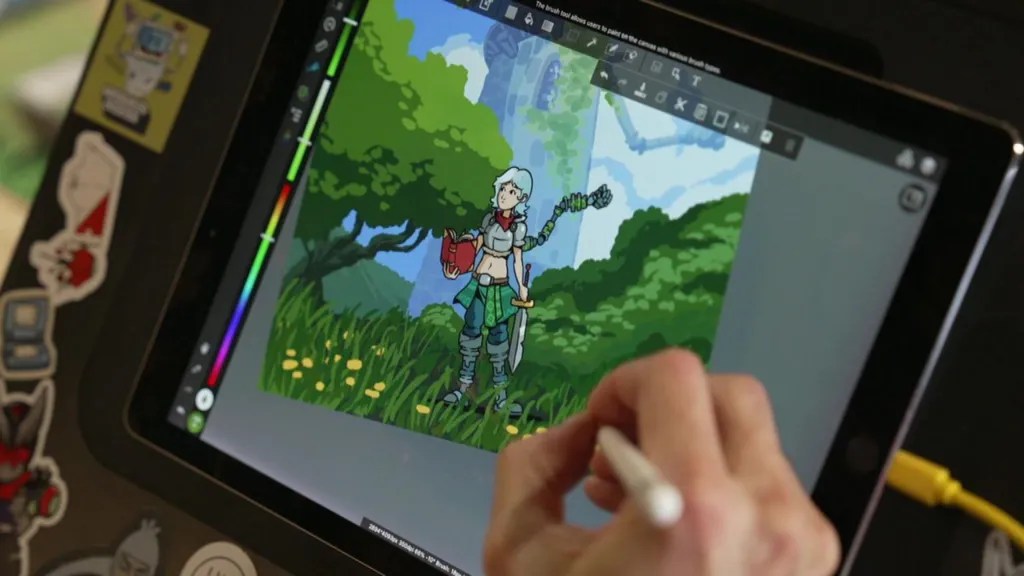
Nich Angell, a Gloucestershire-based comic book illustrator known for his work in children’s books and role-playing games, has expressed alarm over how rapidly evolving AI technologies may displace traditional artists. Angell, who has spent years refining his distinctive artistic style, fears that the abundance of his work online could allow AI to replicate it—without his involvement.
Speaking from his studio in Gloucester, Angell shared how AI image generators focus solely on producing outputs, effectively removing human creators from the equation. He emphasized that the essence of art lies in the human experience, not just the end product.
Artists Feel Increasingly Vulnerable
Modern AI tools are trained to analyze vast datasets and produce images based on user prompts. According to Angell, this process is improving so quickly that it’s becoming harder to distinguish AI-generated art from authentic human work.
“It used to be easy to spot AI flaws, but it’s getting better at mimicking real styles,” Angell said. “If my unique visual signature can be recreated in seconds, then what value does it truly have?”
Angell also expressed concern about the broader implications: not just the loss of commissions or copyrights, but the erosion of the creative journey itself. “What moves people about art is knowing a person made it. That’s what gives it soul,” he stated.
Legal Battles Over Copyright and AI
The debate comes amid legislative discussions in the UK. The House of Lords recently voted against a key amendment to the Data (Use and Access) Bill, a piece of legislation addressing how data—including copyrighted material—can be used by AI developers.
Cheltenham MP Max Wilkinson voiced support for creators like Angell, emphasizing the economic and cultural value of the creative sector, which contributes approximately £124 billion annually to the UK economy. He warned that weakening copyright protections would eliminate the financial motivation for artistic work.
“Tech companies shouldn’t be allowed to exploit artists’ work through AI training models without permission,” Wilkinson argued.
Ongoing Push for Stronger Protections
The Data Bill has been returned to the House of Commons for further review, following strong resistance from peers advocating for transparency in AI development. Prominent musicians, including Sir Elton John, have also called attention to the risks AI poses to creative fields.
In response, the Department for Science, Innovation and Technology acknowledged the concerns and stated it is undergoing a broader consultation. Any future amendments to the Bill will only be considered if they can demonstrably benefit content creators.
Source: BBC News



 gyanugenai
Leave a comment