
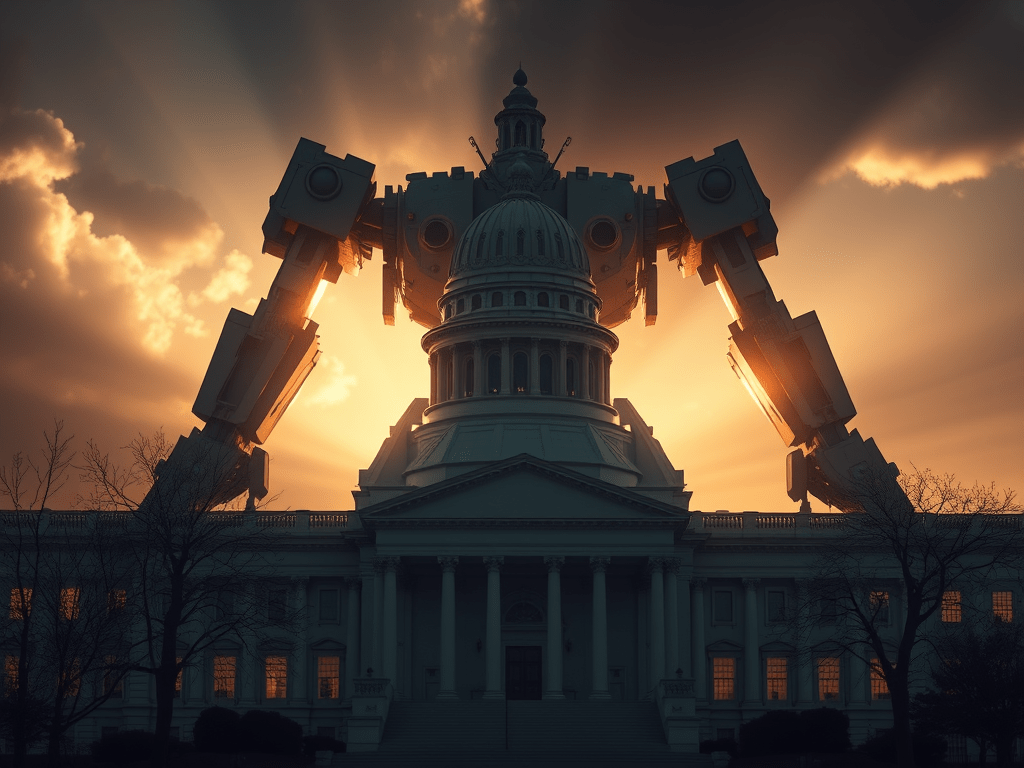
Summary:
A new provision hidden in a federal budget bill proposes a 10-year nationwide ban on state-level regulation of artificial intelligence and automation. Critics argue it could severely limit state authority and put millions of jobs at risk as AI continues to expand into various sectors.
AI Regulation Ban: What’s Inside the Bill?
Tucked into a recently passed House budget reconciliation package is a controversial clause—a moratorium that would prevent all U.S. states from passing their own laws on artificial intelligence and automation for the next decade.
The move has triggered alarm among labor advocates and policy experts who see it as a power grab by large technology corporations. These companies, which are heavily investing in AI-driven technologies, have reportedly lobbied for this clause to ensure minimal interference from state or local governments.
How Big Tech Could Benefit
Technology firms stand to gain significantly from relaxed regulations. From autonomous trucking to drone delivery systems and fully automated logistics hubs, Big Tech envisions a future with less human labor and fewer regulatory hurdles.
Automation isn’t limited to manufacturing and delivery roles. Increasingly, AI is being used to streamline tasks in finance, law, journalism, and graphic design—placing both blue- and white-collar jobs at risk. Without strong regulatory frameworks, critics warn that this unchecked expansion could lead to widespread job displacement and misuse of technology, including deepfakes and AI-driven fraud.
States Fight for Their Right to Regulate
Some states have already begun drafting legislation to address the growing influence of AI in areas such as public safety, surveillance, and employment. Lawmakers from both political parties have expressed interest in regulating driverless vehicles, workplace automation, and AI-powered surveillance systems.
The proposed federal ban, however, would override these local efforts, essentially stripping states of the authority to govern emerging technologies within their borders. Analysts argue that such a move would represent one of the most sweeping federal preemptions of state power in modern U.S. history.
The Stakes for American Workers and State Sovereignty
Opponents of the moratorium argue that it favors corporate interests over public accountability. Critics claim the proposal is less about cohesive national policy and more about shielding tech companies from scrutiny as they expand automation initiatives that could cost millions of jobs.
Without the ability for states to react to rapidly evolving technologies, they risk losing control over labor protections, public safety standards, and democratic oversight. The debate now heads to the Senate, where lawmakers still have the opportunity to amend the bill.
What Comes Next?
With AI’s role in society growing rapidly, experts emphasize the importance of balanced and transparent policy. The Senate’s decision on whether to keep or remove the moratorium will likely shape the future of U.S. technology governance—and determine how much say individual states have in protecting their workers and communities.
Source: Fox News




 gyanugenai
Leave a comment